Safety Around Bleach-Based Mould Products
Nearly everything we recommend on this site, Skylarlife, HG, Astonish and the import gels, is built on sodium hypochlorite, which is bleach. Bleach is effective, cheap and safe enough that it's in half the cupboards in Britain, and it still sends people to A&E every year, almost always for one of the same few avoidable reasons. Five minutes here saves you being one of them.
The one rule that outranks all others: never mix
Bleach plus anything acidic releases chlorine gas. That includes many limescale removers, some toilet cleaners, vinegar and citric acid "natural" descalers. Bleach plus ammonia-based cleaners releases chloramine gas. Both gases can put you on the floor in an enclosed bathroom, and the classic accident isn't deliberate mixing, it's sequence: spraying a bleach mould product onto a surface that still carries residue of the limescale remover you used ten minutes ago.
The rule that prevents all of it: one product per surface per day, and rinse between products. If you've descaled the shower this morning, the mould gel waits until tomorrow, or until you've rinsed the area thoroughly with plain water.
The rest of the rules
- Ventilate the whole time. Window open or fan running while the product is applied, while it dwells, and while you wipe it off. Overnight gel dwells mean the bathroom door stays open or the window stays cracked. Fumes in a sealed room accumulate for eight hours.
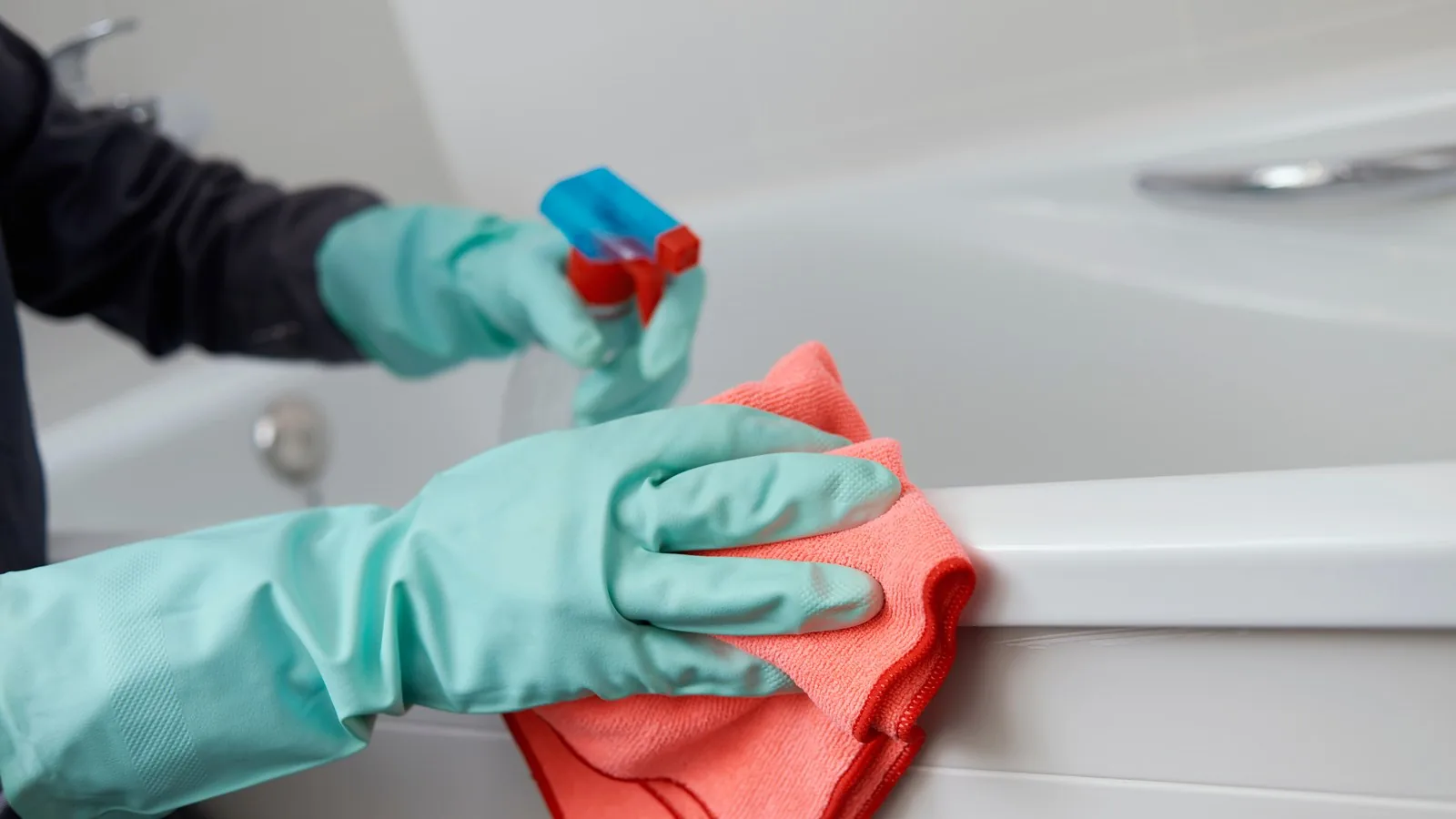
- Wear proper gloves. Rubber household gloves, not thin vinyl food-prep ones. Hypochlorite burns skin slowly enough that you notice late.
- Protect your eyes when working overhead. A drip of gel from a ceiling corner into your eye is an emergency, not an inconvenience. Cheap safety glasses, or don't work above your head.
- Expect ruined clothes. One invisible fleck bleaches a permanent orange spot onto anything you're wearing. Old clothes only.
- Keep children and pets away during the dwell. A bead of gel on a bath edge looks like nothing to a toddler or a cat. Shut the room off for the whole dwell time.
- Rinse surfaces that touch skin or food. Bath edges, sink surrounds, anything in the kitchen: thorough rinse after wiping the gel away.
- Store tubes upright, capped, out of reach, in original packaging. The nozzle tubes look uncomfortably like toothpaste. That's not a hypothetical; keep them separated from anything bathroom-shelf adjacent.
- Asthma and breathing conditions: be careful with this whole category. Chlorine fumes are a known airway irritant. Ventilate aggressively, do short sessions, or have someone else apply it. If a product ever makes you cough or your chest tighten, leave the room first and reassess after.
If something goes wrong
- Fumes and you feel unwell: get to fresh air immediately. If breathing difficulty continues, call NHS 111, or 999 if it's severe.
- Skin contact: rinse with running water for several minutes.
- Eye contact: rinse with running water for at least 10-15 minutes and seek medical advice.
- Swallowed: rinse the mouth, drink a little water, do not induce vomiting, and call 111 (or 999 for a child or significant amount) with the packaging in your hand.
Does "bleach-free" solve this?
There are hypochlorite-free mould products, usually based on hydrogen peroxide or quaternary ammonium compounds. They have their place, particularly for people sensitive to chlorine fumes, but two honest notes: they're generally weaker on the black staining that brings people to this site, and "bleach-free" is not "precaution-free", peroxide products bleach fabrics and irritate skin too. For stained silicone, the hypochlorite gels remain the tools that work, used with the rules above.
None of this is a reason to avoid these products. It's a reason to spend one extra minute on setup: window open, gloves on, nothing else used on that surface today, kids out. Do that and the products on this site are boring in the best possible way.